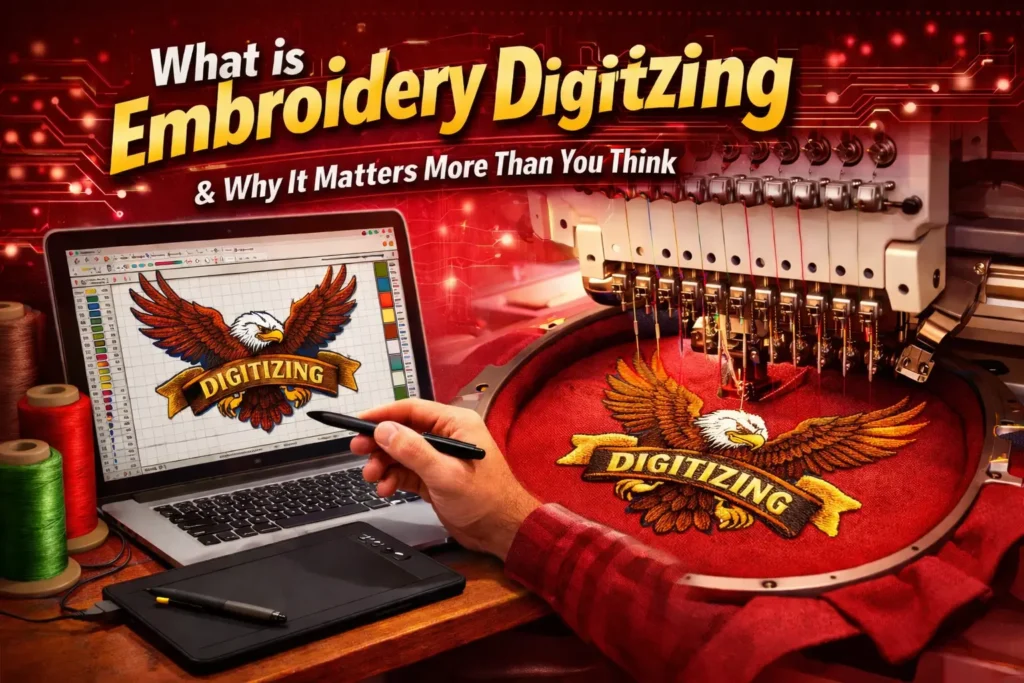
What is Embroidery Digitizing and Why It Matters More Than You Think.
Embroidery digitizing is the foundation of high-quality machine embroidery. While many people assume embroidery starts with thread and fabric, the real magic begins long before the machine starts stitching.
What is Embroidery Digitizing?
Embroidery digitizing is the process of converting artwork (logo, text, or design) into a stitch file that an embroidery machine can read. This file instructs the machine on stitch direction, stitch type, density, sequencing, and underlay settings.
It is not automatic conversion. True digitizing requires technical expertise and an understanding of fabric behavior, stitch mechanics, and machine limitations.
Why Professional Digitizing is Critical
A poorly digitized file can result in thread breaks, uneven stitches, fabric puckering, distorted logos, and poor detailing.
A professionally digitized file ensures clean edges, smooth curves, proper stitch flow, fabric stability, and long-lasting embroidery quality.
Digitizing is Engineering, Not Just Design
Embroidery digitizing requires knowledge of stitch types (Satin, Fill, Running), pull and push compensation, underlay techniques, and fabric differences.
Each fabric requires a different digitizing approach. A design for a T-shirt will not behave the same on a cap or jacket.
Final Thought
If embroidery is the body, digitizing is the skeleton. Without strong digitizing, even the best embroidery machine cannot deliver quality results.